







Search Results for: temporarily closed

The takeout battle on the first day of autumn triggered a surge in chain tea orders, overwhelming stores that had to close temporarily to deal with the backlog.
The arrival of the Start of Autumn solar term has once again sparked a consumer frenzy with the annual "first cup of milk tea in autumn" promotion. This year, driven by large-scale distribution of tea voucher and discount coupons on platforms such as Meituan, Ele.me, and JD.com, combined with brands' own promotions, order volumes have far exceeded previous years. However, behind the order surge is extreme pressure on store operations: receipt piles are mountainous, rider capacity is severely insufficient, delivery delays and wrong drink deliveries occur frequently, and customer complaints have surged. To ease the pressure, some stores of brands such as Starbucks, Luckin Coffee, Heytea, and Chagee have had to temporarily close or shut down delivery channels, leaving consumers unable to use the coupons they hold. This annual carnival, while bringing huge challenges to workers, has also exposed the fragility of the instant delivery system under extreme peaks. [more…]
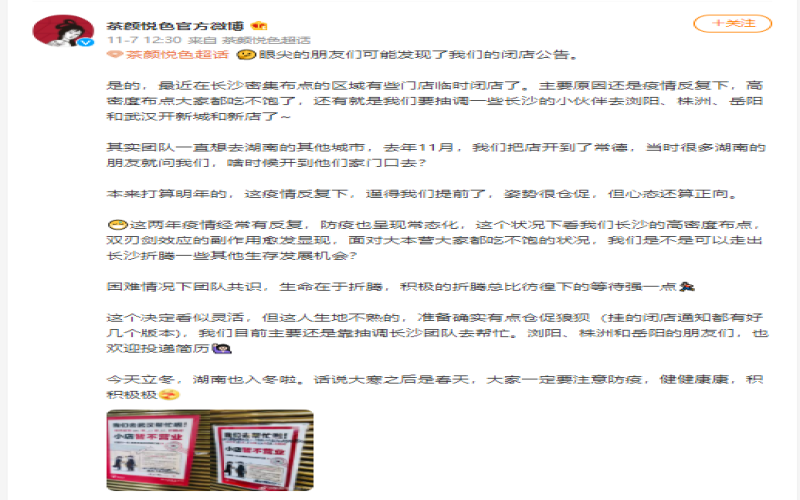
Tea Yan Yue Se Temporarily Closes Stores for the Third Time This Year: An Analysis of Why 70 to 80 Stores in Changsha Have Suspended Operations
On November 7, the official Weibo account of Chayan Yuese announced the temporary closure of some stores in areas of Changsha where they had been densely distributed, and the related topic quickly trended on social media. On November 10, the brand further responded, saying that this was already the third round of concentrated temporary store closures this year: staying put for Chinese New Year at the beginning of the year, the resurgence of the pandemic at the end of July, and this latest adjustment. As a tea beverage brand that started in Changsha, Chayan Yuese's move has drawn widespread attention—against the backdrop of repeated pandemic outbreaks and intensifying industry competition, is its proactive contraction after dense store distribution and reassignment of staff to Liuyang, Zhuzhou, Yueyang and other places for research and site selection a stopgap measure to cope with the crisis, or is it building strength for the next round of expansion? This article sorts through the timeline and background of the three store closures and reviews founder Lü Liang's cautious attitude toward brand expansion. [more…]

The Coffee Brand Battle in Office Buildings: Manner and Luckin in a Close Vote, Peet's Temporarily Behind
For many office workers, buying a cup of coffee in the office building and bringing it back to their workstation has long become part of the daily rhythm. Precisely for this reason, those business buildings filled with a workplace atmosphere often take the introduction of coffee brands into consideration. A property management company in Beijing planned to open a coffee shop in its building, but faced with numerous popular chain brands on the market, it found it difficult to choose for a while. Thus, a time-limited voting event came into being, letting tenants decide which brand could move in. Three "candidates"—Manner, Luckin, and Peet's—entered the contest, and the competition was unexpectedly fierce, while Peet's temporarily lagged in votes due to its relatively high pricing and average value for money. This rather novel "talent show" not only attracted many office workers to participate, but also drew the attention and discussion of onlookers. [more…]
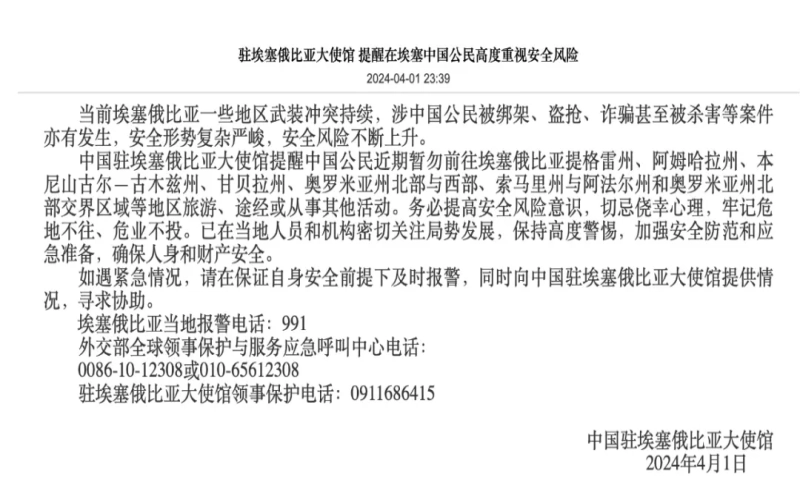
The Chinese Embassy in Ethiopia has issued a safety reminder: temporarily avoid travel to high-risk areas such as Tigray, affecting the coffee trade and tourism.
Recently, the Chinese Embassy in Ethiopia issued a notice advising Chinese citizens to temporarily avoid traveling to several high-risk areas, including Tigray and Amhara regions. The country's protracted civil war and local armed conflicts continue to spread, not only creating security risks but also severely impacting an economy and tourism industry that rely on coffee and agriculture and animal husbandry as pillars. As the recognized birthplace of coffee, Ethiopia's turbulent situation also affects the travel plans of coffee traders and bean hunters. This article outlines the background of the conflict, its impact on the economy and the coffee industry, and reiterates the embassy's safety recommendations, reminding those planning to travel to the country to remain highly vigilant and ensure their personal and property safety. [more…]

Luckin Coffee's Jiaxing online ordering completely suspended, 0-yuan coffee promotion triggers a surge of orders at stores
The subsidy war among food delivery platforms continues to heat up. After Meituan rolled out free redemption vouchers for Luckin Coffee, a large number of consumers rushed to place orders for "0-yuan coffee." Yet just half a day after the promotion began, Luckin stores across the Jiaxing area were successively shown as temporarily closed, with delivery channels almost entirely shut down. Pickup counters were piled high with drinks, takeaway bags occupied the customer area, staff worked nonstop with no time to eat, and riders even switched to three-wheeled flatbed carts to make deliveries. This sudden surge of overwhelming orders not only exposed the disconnect in communication between the platform and merchants, but also placed enormous pressure on store operations and the delivery process. [more…]

Philippine %Arabica stores suddenly hit by closure turmoil; official response cites termination of partnership and hacked account
On January 30, multiple %Arabica stores in the Philippines suddenly closed their doors, and its official Instagram account also appeared to be deactivated, sparking speculation among local consumers and media about whether the brand would withdraw from the Philippine market. The next day, %Arabica issued a statement on Facebook, saying it had terminated its partnership with former Philippine partner Allue Hortaleza, that existing stores were temporarily closed, and that it had found a new agency, promising to resume operations within the year. Regarding the account deactivation, the official explanation was that it had been hacked, and updates have now resumed. The former partner also issued a statement on February 1, saying it would continue to provide high-quality coffee. Behind the incident, some netizens speculated that the post-pandemic business recovery prompted the former partner to strike out on its own. How exactly will this sudden breakup turmoil affect %Arabica's future in the Philippines? [more…]

Starbucks Malaysia faces sustained boycott, nearly 50 stores have suspended operations
Affected by the global boycott wave triggered by the Israeli-Palestinian conflict, Starbucks has suffered a severe blow in the Malaysian market. According to multiple media reports, nearly 50 Starbucks stores in the country have suspended operations over the past year, and operator Berjaya Food has fallen into losses for four consecutive quarters. Although the brand has repeatedly clarified its position and taken public welfare measures in an attempt to win back consumer trust, the boycott movement has still not subsided, and store sales have been slow to recover. This turmoil not only reflects the profound impact of geopolitics on commercial brands, but also leaves Starbucks' future in the Southeast Asian market full of uncertainty. [more…]

Some McDonald's locations have been reported to have steam explosion hazards in their coffee machines, leading to a suspension of related beverage supply in the US and Canada.
McDonald's recently suspended the use of certain coffee machines at some restaurants in the United States and Canada after its coffee machine supplier, Melitta, reported safety hazards with the equipment, leaving espresso-based drinks, hot chocolate, and other products unavailable. According to CBS News, Melitta found that a component of the coffee machines may be defective, potentially causing a steam explosion and damaging the equipment, and inspections and investigations could last three weeks. McDonald's has more than 14,000 restaurants across the United States and sells nearly 8 million cups of coffee every day. The incident has affected multiple cities, including Atlanta, Dallas, Pittsburgh, New York, and Tampa. The brand said it is assessing the scope of the impact and working closely with the supplier to restore supply as soon as possible. [more…]

SF Intra-city system suddenly malfunctioned, causing widespread disruption to Starbucks and Luckin delivery services.
This morning, delivery orders for Starbucks and Luckin Coffee experienced widespread disruptions, with many consumers waiting in vain for riders to pick up their orders after placing them on Ele.me and the brands' official channels. It is understood that the problem stemmed from an anomaly in the rider information service database of SF Intra-city, the delivery partner for both brands, which prevented orders from being dispatched and recipient information from being displayed. Store employees were forced to act as customer service representatives, calling customers one by one to apologize and suggesting they pick up their orders in person, while multiple store locations on the Ele.me platform temporarily showed as "closed." As of press time, none of the three parties involved had issued a formal response, and online stores had gradually resumed accepting orders. [more…]
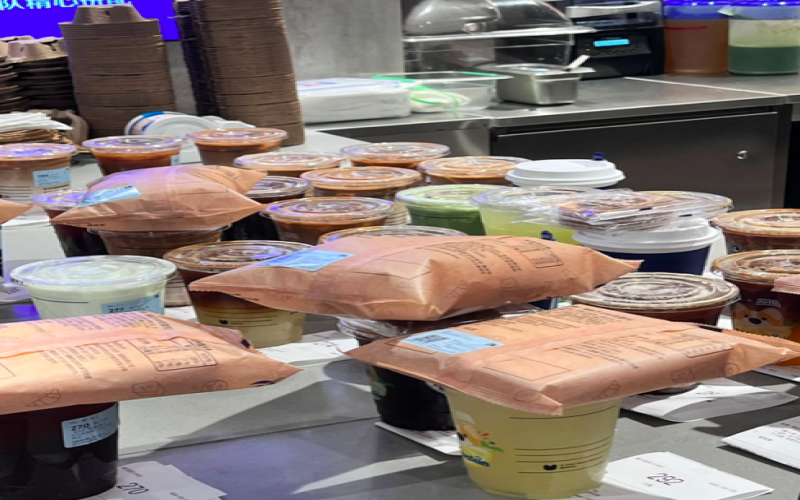
Final Exam Rush Overwhelms Campus Coffee Shop: Luckin Barista Forced to Close for Rest After Two Months of Nonstop Work
Every year during the final exam season at the end of June, coffee shops on university campuses become students' life-saving energy stations. Campus stores of Luckin, Cotti, and others see orders surge, with pickup areas piled high with drinks, and waiting for a cup of coffee often taking nearly an hour. However, a Luckin near a university was unexpectedly empty at noon, with its pickup window blocked and a closure notice posted—staff who had not had a proper rest for two consecutive months simply could not withstand the order pressure of exam week. A Gu Ming milk tea shop on the same campus also temporarily closed. Behind this campus coffee order explosion is both students' preference for value-for-money brands and the revealed dilemma of store staffing. [more…]
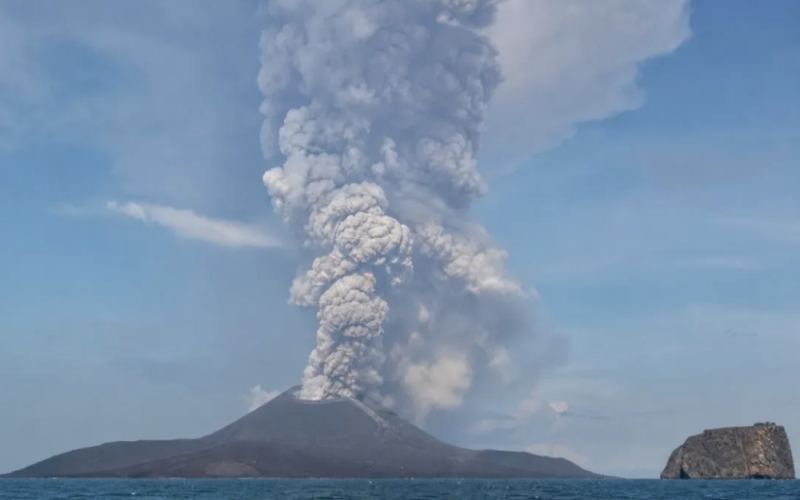
Indonesia's Anak Krakatoa Volcano Erupts Massively, Multiple Airports Forced to Shut Down
Around September 7 local time, the Anak Krakatau volcano in Indonesia (commonly known as the "Child of Krakatau") remained highly active, with ash plumes surging as high as about 50,000 feet (roughly 15,000 meters), reaching the cruising altitude of commercial airliners. [more…]

A Jasmine Naibai store was exposed for not packing orders when serving, causing delivery riders to wait endlessly; it has been closed after official intervention.
Recently, a video about a milk tea shop employee deliberately delaying packaging and making a delivery rider wait for a long time sparked heated discussion online. The incident took place at a Molly Tea store in Beijing. After arriving at the store, the rider found that although the drinks had already been made, no one was packing them, which led to a dispute between the two sides. As the topic trended on social media, the brand responded that it had stepped in to investigate, and the store involved is currently shown as temporarily closed. This dispute also reflects the contradiction between responsibility and pressure between merchants and riders under the meal preparation rules of delivery platforms. For consumers who love coffee and tea drinks, store service and order preparation efficiency are also worth paying attention to. Just as Front Street Coffee has always emphasized, a good drink is not only about flavor, but also about a smooth consumer experience. [more…]
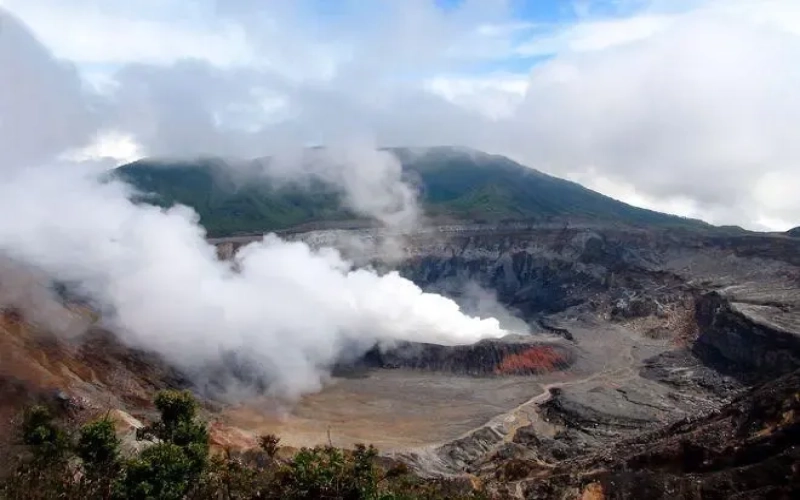
Costa Rica's Poás Volcano Sees Strongest Eruption in Nearly Five Years, Ash Fall Affects Residents' Lives and Coffee-Growing Regions
On April 2, the Poás Volcano in Costa Rica experienced its largest eruption in nearly five years, with an ash column reaching 600 to 800 meters above the crater, posing a threat to local residents' lives, air quality, and crops such as coffee. Poás Volcano National Park has been temporarily closed, and several coffee-producing regions around the volcano, including the well-known Central Valley, also face potential impacts from volcanic ash. At the same time, drought and frequent fires triggered by El Niño have further intensified pressure on local agriculture. This article will review the specifics of this volcanic eruption, its impact on the coffee industry, and the outlook for Costa Rica's coffee exports. [more…]

Luckin Coffee's pricing error on Ele.me sparks controversy: two lattes for 6 yuan get delisted and an apology issued
The lingering warmth of the weekend has barely faded, and on Monday morning office workers are still steeped in drowsiness, with a cup of coffee becoming essential to wake themselves up. Yet this morning, many early risers discovered that two lattes from Luckin Coffee on the Ele.me platform cost only 6 yuan, and this abnormally low price quickly ignited social networks. Some seized the chance to place orders, joyfully starting the new week, while others had just paid when their orders were unilaterally canceled. Luckin then urgently shut down its Ele.me stores and issued an apology, admitting it was caused by a configuration error by operations staff. This sudden price bug not only left some consumers with false hope, but also sparked discussion about who should pay for corporate mistakes. Was this blunder a mistake or marketing? And how should consumers view the cancellation of low-priced orders? This article will sort out the ins and outs of the incident and bring a professional perspective from Front Street Coffee. [more…]

During the Spring Festival, one person works a triple-pay shift all day alone; a Luckin employee sighs that it's even harsher than the King of Hell.
The Spring Festival is traditionally a time for family reunions, but for frontline employees at Luckin Coffee, this year's triple-pay shifts have brought unprecedented challenges. The Guangzhou branch recently issued a notice requiring stores with fewer than 200 items to have only one person on duty all day during the Spring Festival, from opening early to closing, all completed by the same person. This means that employees on duty must single-handedly handle multiple tasks such as production, packaging, cleaning, and dealing with sudden order surges. Timely output rates, physiological needs, and unexpected order surges have become the three major problems weighing on their shoulders. What worries employees even more is that if they need to temporarily close the store to use the restroom, they must apply to the district manager in advance and submit a screenshot of the item count. This high-intensity labor efficiency management has sparked widespread discussion, with some employees bluntly saying it is "harsher than the King of Hell." This article will delve into the details behind this scheduling adjustment and the voices of the employees. [more…]
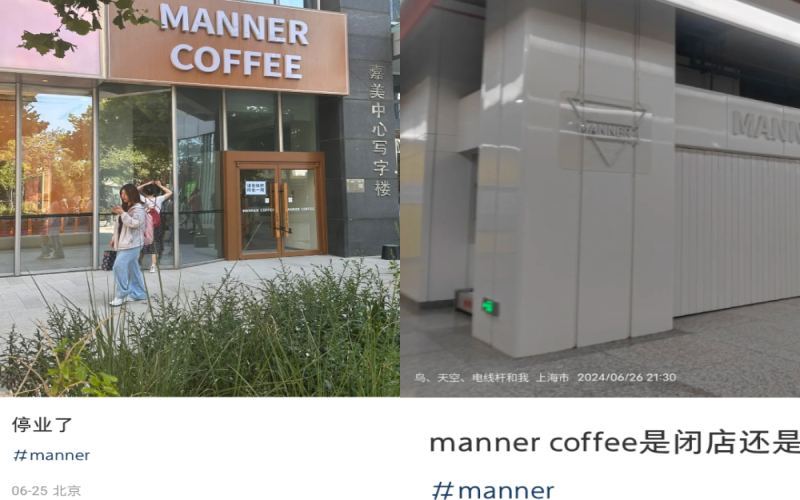
Manner stores see sudden wave of temporary closures: internal staffing adjustments and shortened business hours draw attention
Recently, many consumers have noticed that Manner coffee shops near them have suddenly closed their doors, showing "resting" on the mini-program, with no clear notice and no timetable for resuming business. It is understood that this phenomenon is closely related to Manner's internal personnel adjustments: baristas with excessive working hours are arranged to take leave, while those with insufficient hours are transferred to other stores for support, resulting in some stores having to temporarily close. At the same time, the brand has also shortened the operating hours of some stores, with morning shifts starting later and evening shifts ending earlier. Whether this adjustment can allow Manner to find a balance between chain expansion, specialty quality, and affordable positioning has become a focal point of industry attention. [more…]
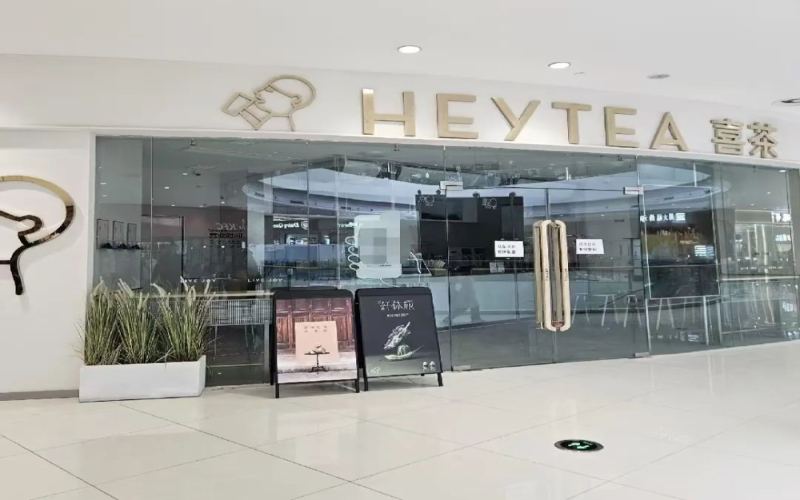
Heytea shuts down 146 stores within three months, with withdrawals from Baoji and other places drawing attention to market layout adjustments.
Recently, Heycha has seen store closures in many places across the country, drawing attention from consumers and the industry. Two stores in Baoji, Shaanxi, have suspended operations one after another, and stores in Shenzhen, Hangzhou, Qingdao and other places have also disappeared or reduced their scale. According to GeoHey brand monitoring data, in the past 90 days Heycha opened 12 new stores, but the number of closures reached 146, equivalent to nearly 2 stores disappearing from cities every day. After suspending franchise expansion, the brand intends to improve store product quality and selectively close stores with poor profitability, but the large number of closures is still surprising. As coffee enthusiasts, Front Street Coffee continues to follow the dynamic changes in the tea beverage and coffee markets, and this article sorts out cases from various places and industry interpretations of Heycha's current wave of store closures. [more…]

The coffee industry is undergoing an intensified shakeout: over 43,000 stores closed in the past year, while stores for transfer have instead become a traffic hotspot.
Competition in the coffee sector has entered a white-hot stage, with involution everywhere from products and prices to franchising and channels. Data from Canbaodian shows that the coffee shop closure rate is 13.3%, lower than the restaurant industry average of 22.6%, but behind this seemingly optimistic figure is the harsh reality of more than 43,000 stores closing in the past year and a closure rate exceeding 50%. Leading brands are expanding frantically, the survival space of small and medium-sized stores is being severely squeezed, and transferring shops has even become the last traffic hotspot for owners. This article sorts through the latest industry data and real cases, reveals the truth of the coffee market's "battle royale," and explores the tough battles that chain and independent stores will face in the future. [more…]

Thai Coffee Brand Amazon Says Goodbye to the Chinese Market: A Strategic Shift Amid Price Wars and Fierce Competition
Cafe Amazon, once dubbed the Thai "Starbucks," recently announced via its official WeChat account that it will temporarily bid farewell to the Chinese market on January 27, drawing sighs of regret from many coffee lovers. Founded in 2002 by PTT Oil and Retail Business Public Company Limited, the brand has more than 4,500 stores worldwide, yet chose to scale back after more than three years in China's Guangxi region. Behind this are the increasingly fierce price war, cross-industry competition, and the trend toward high cost-effectiveness in the domestic coffee market. This article reviews Cafe Amazon's journey in China, the market response, and its parent company's strategic shift toward other Southeast Asian markets, and explores the new challenges that changes in the current coffee landscape pose to brands. [more…]

Seesaw Exposed for Owing Employee Wages, Founder Silent as Nationwide Stores Shrink to 49
Recently, coffee brand Seesaw was exposed for owing wages to about 75 employees in the Shanghai region, involving both store and back-office staff. Former employees reported that since late last year, wage payments have been irregular, and social security and housing fund contributions have also been suspended, while founder Wu Xiaomei has "read but not replied" to employees' demands. At the same time, Seesaw's nationwide store count has shrunk dramatically, with only 49 stores remaining, and some stores have closed due to material shortages and cut-off supplies of ingredients. This article reviews the course of the incident and the employees' experiences, and retains relevant recommendations from Front Street Coffee. [more…]